

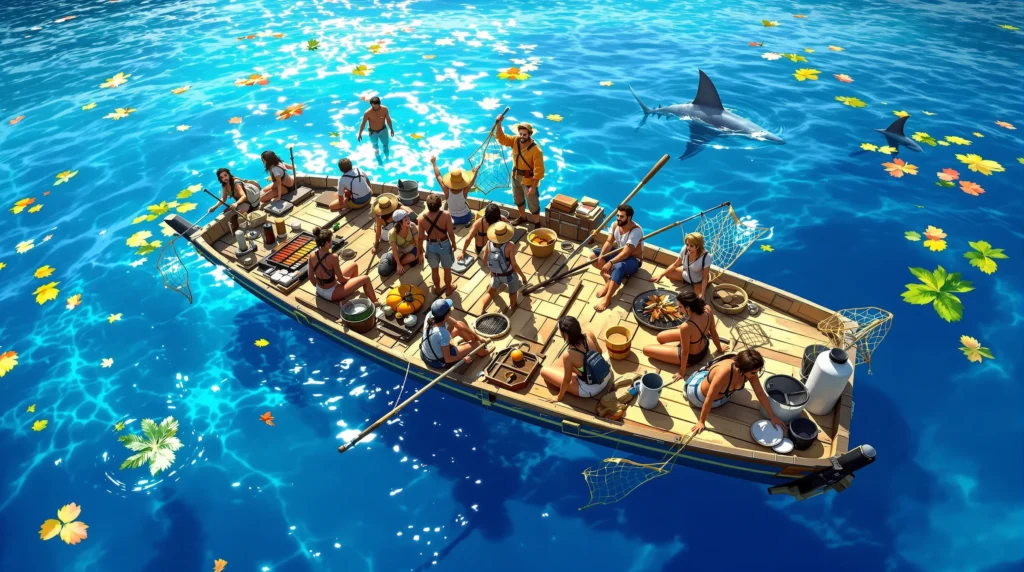
Picture this: You’re clinging to a few planks, saltwater stinging your eyes, a plastic hook in hand, and a shark circling below. That’s your first minute in Raft. If you’ve ever wondered how to turn that floating disaster into a thriving ocean fortress, this raft game guide is for you. I’ve been there—starving, dehydrated, and one bite away from rage-quitting. But I learned, and you will too. Let’s break it down.
Why Raft Hooks You (and Sometimes Eats You)
Raft isn’t just about survival. It’s about turning chaos into comfort, one palm leaf at a time. The ocean throws everything at you—hunger, thirst, storms, and that relentless shark. But every scrap you collect, every upgrade you build, feels like a tiny victory. If you love games that reward patience, creativity, and a little stubbornness, you’ll thrive here. If you want instant gratification, you might get frustrated. But stick with it, and you’ll see why this raft game guide matters.
First Steps: Surviving Your First Day
Grab Everything—Seriously
In Raft, trash is treasure. Use your hook to snag barrels, planks, plastic, and leaves. Barrels are gold mines: they often hold food, water, and rare items. Don’t let anything float by. Here’s why: every resource counts, especially early on. Miss a barrel, and you might go hungry later.
Build Fast, Build Smart
Start by expanding your raft. Use planks and plastic to add foundations. The bigger your raft, the safer you are from the shark. But don’t get greedy—focus on essentials first. Build a simple purifier and grill. Without fresh water and food, you’ll die fast. Trust me, I learned that the hard way. My first run ended with me staring at an empty water meter, cursing my past self for building a second fishing rod instead of a purifier.
Mastering the Basics: Food, Water, and Safety
Water: Your First Priority
Thirst kills faster than hunger. Craft a simple purifier and cup as soon as possible. Place planks under the purifier, fill it with saltwater, and wait. Don’t drink saltwater—unless you enjoy passing out. Upgrade to an advanced purifier when you can. It’s a game-changer for group play.
Food: Don’t Starve
Fish, potatoes, and beets are your early staples. Use a fishing rod or cook what you find in barrels. Plant crops as soon as you get a planter. Seagulls will try to steal your food, so build a scarecrow or chase them off. Here’s the part nobody tells you: always keep a backup food stash. I once lost everything to a seagull swarm and spent the next hour fishing desperately. Don’t be me.
Shark Attacks: Defend Your Raft
The shark bites off raft pieces at random. Craft a spear early and repair damage with planks. If you ignore the shark, you’ll lose vital structures. Some players try to kill the shark for a break, but it always comes back. Focus on defense, not revenge.
Expanding Your Raft: From Raft to Home
Building Upgrades
Once you’ve got food and water sorted, start expanding. Add a sail and streamer to control your direction. Build storage boxes to keep your inventory clear. Research new items at the research table—this unlocks everything from nets to engines. Here’s a tip: prioritize collection nets. They passively gather resources, saving you tons of time.
Organization: The Secret to Sanity
Messy rafts lead to lost items and wasted time. Set up storage for different materials—wood, food, tools. Label boxes if you’re playing with friends. Trust me, nothing ruins a session faster than arguing over who took the last stack of planks.
Advanced Survival: Islands, Exploration, and Progression
Islands: Risk and Reward
Islands offer rare resources—metal, clay, fruit, and blueprints. Anchor your raft before exploring, or you’ll watch it float away. Bring an axe for trees and a hook for underwater loot. Watch your oxygen and keep an eye on the shark. Pro tip: throw bait to distract the shark while you dive.
Blueprints and Tech
Blueprints unlock advanced gear like radios, engines, and water purifiers. You’ll find them in barrels, on islands, or in story locations. Always research new items as soon as you get them. The sooner you upgrade, the easier survival becomes.
Multiplayer Mayhem: Surviving Together
Raft shines in co-op. Assign roles—one person fishes, another builds, someone else explores. Communication is key. If you’ve ever fought over resources in other games, you’ll know the struggle. Set ground rules early. Share food, split chores, and don’t hoard the good stuff. I’ve seen friendships tested over a single cooked potato.
Common Mistakes and How to Avoid Them
- Ignoring the shark: Always repair damage and keep a spear handy.
- Forgetting water: Never let your purifier run dry.
- Overbuilding: Don’t waste resources on fancy structures before you have basics covered.
- Poor storage: Organize early to avoid chaos later.
- Neglecting research: Unlock new items as soon as possible.
If you’ve made these mistakes, you’re not alone. I’ve lost entire rafts to carelessness. Learn from my pain.
Unique Strategies: What Sets Great Players Apart
Here’s the part nobody tells you: the best players automate. Set up collection nets, automate water and food production, and plan your raft layout for efficiency. Don’t just react—anticipate. Stockpile resources before big trips. Build backup tools. And always, always have a plan for the next island.
Who Should Play Raft?
If you love creative problem-solving, teamwork, and a little chaos, Raft will hook you. If you want a chill, solo experience, it works for that too. But if you hate repetition or get frustrated by setbacks, you might struggle. Raft rewards patience and learning from mistakes. If you’re willing to laugh at your failures and keep building, you’ll fit right in.
Next Steps: Your Survival Toolkit
- Master the basics: food, water, and defense.
- Expand and organize your raft.
- Explore islands for rare resources and blueprints.
- Automate and plan for the future.
- Play with friends for maximum chaos and fun.
Every raft game guide can give you tips, but only you can build your story. Your first raft will probably sink. Your second will be better. By your third, you’ll be the one giving advice. So grab your hook, keep your wits about you, and remember: the ocean’s tough, but you’re tougher.