
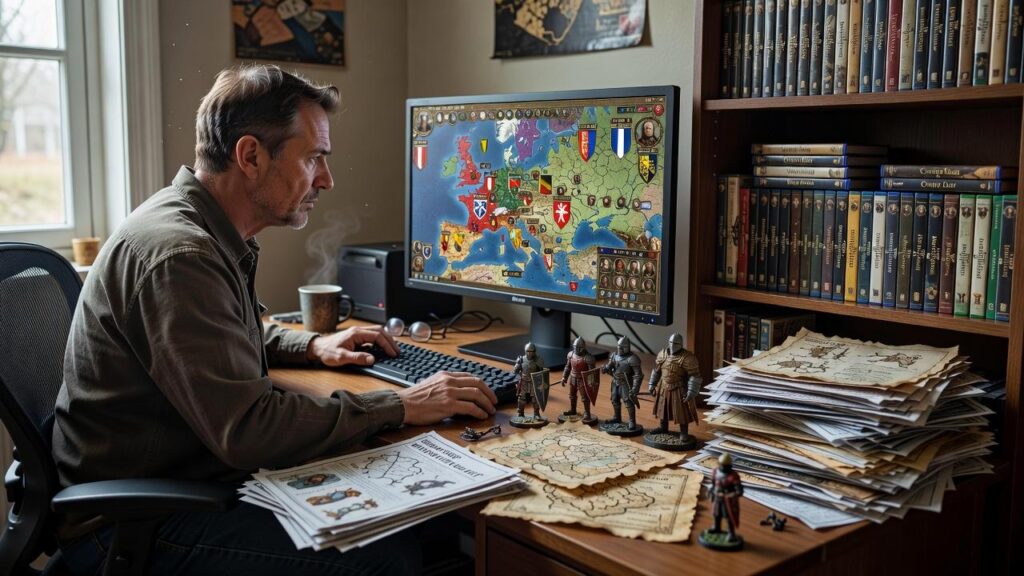
I launched Crusader Kings 2 shortly after its release in 2012. Fourteen years have passed since then. Mods and user-generated content have transformed the strategy game into a project that never seems to grow old. People in the community still launch new mod builds and discuss fresh mechanics. Every new playthrough creates the feeling of playing a completely different game.
The Psychological Reasons Behind Player Engagement
Constant novelty keeps players engaged more effectively than official expansions alone. Emotional attachment to a created world grows with every new campaign. A successful mod also gives its creator a noticeable level of social status within the community. Players begin to perceive the Middle Ages as their own personal version of history. For some, the highest level of immersion comes from perfectly researched historical accuracy; for others, it is the ability to explore unexpected fantasies, from dynastic intrigue to milf panties. Some players even create their own mechanics and events that reflect their unique preferences, including highly unconventional elements of custom content. After that, the vanilla experience can feel static and predictable. Personalization creates a strong sense of authorship and ownership.
Why CK2 Is Still Alive in 2026
Crusader Kings 2 was released in 2012. Most grand strategy games lose their core audience three to four years after official support ends. CK2 received more than 1,100 official updates and DLC releases by the time the studio stopped supporting it. After 2018–2019, mods became the game’s true second life. The community continues to maintain active discussions on forums and in the Steam Workshop. Major updates for popular mods are still released weekly, even in 2026. This makes CK2 fundamentally different from strategy games that fade away without developer attention.
The Power of Official Modding Tools
Paradox Interactive created one of the most accessible modding frameworks in strategy gaming. The structure is built around simple text files. Modders can freely edit events, decisions, traits, localization, portraits, and music. These changes require minimal technical knowledge. A single enthusiast can add a new culture with unique buildings and event chains within a few weeks. The community generates content faster than the studio itself could. This approach triggered a chain reaction that produced thousands of mods capable of radically changing the mechanics of dynasties, warfare, and succession.
The Most Significant Mods That Changed the Game
Several projects completely redefined what CK2 could do. CK2+ added hundreds of new decisions and character traits. Project Balance improved balance for multiplayer games. Historical Immersion Project, at its peak, combined more than 12 sub-mods. HIP radically reworked cultural mechanics, historical accuracy, and the depth of various systems. After the End moved the setting to a post-apocalyptic North America filled with new religions and factions. Elder Kings recreated The Elder Scrolls universe inside the game’s engine. The Game of Thrones mod brought Westeros to life with detailed houses, characters, and scripted events. These total conversions increased the scale and level of detail several times over. Players spend hundreds of hours playing entirely within a single one of these mods.
User-Generated Content as a New Form of Creativity
Simple balance tweaks quickly evolved into full-scale total conversions. Players create their own eras, entirely new cultures, religions with unique mechanics, and even alternative universes. The CK2 community has produced more full total conversions than almost any other grand strategy community, including projects inspired by Game of Thrones, The Elder Scrolls, Warhammer, The Lord of the Rings, and Star Wars. The Steam Workshop and Paradox forums have made it easier to share files and collaborate on projects. Many modders spend hundreds of hours working solely on the localization and balancing of a single project. This activity has long since evolved into a form of digital art.
How the Modding Community Keeps the Game Alive Today
Discord servers have become the main hubs for modders in 2026. They host regular contests for creating new content and collaborative testing of updates. Popular projects receive major updates every week, even though the base game is already fourteen years old. CK2 veterans actively exchange ideas and experience with Crusader Kings 3 developers. Some players have moved on to the third installment, but the core community has remained loyal to the original. These people continue to refine existing mods and launch new total conversions. Their work demonstrates how a strong official modding framework can extend a game’s lifespan for decades after official support ends. I still return to my favorite mod builds, and every time I find something new.